 EN
EN
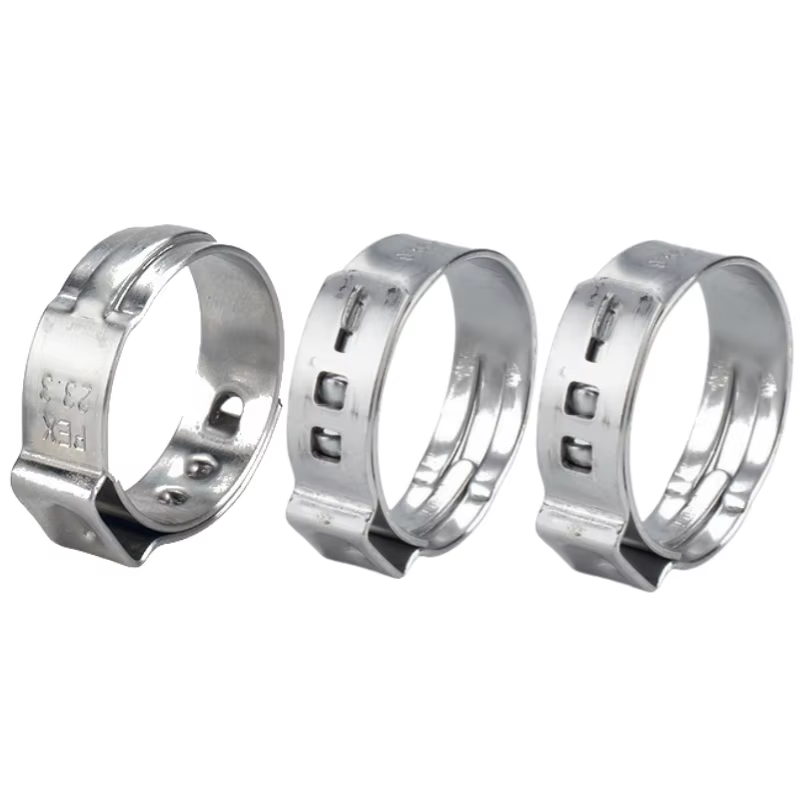
In industrial applications where secure connections are paramount, double ear hose clamps have emerged as the gold standard for ensuring leak-proof performance. These specialized fastening devices combine innovative design with robust construction to deliver superior holding power compared to traditional clamp solutions. When critical systems demand absolute reliability, engineers and maintenance professionals consistently turn to double ear hose clamps for their proven track record in demanding environments.
The engineering principles behind double ear hose clamps represent decades of refinement in mechanical fastening technology. Unlike conventional worm-drive clamps that can loosen over time due to vibration and thermal cycling, these precision-engineered components maintain consistent clamping force throughout their service life. Their unique dual-ear configuration distributes stress more evenly around the circumference of the hose, creating a more reliable seal while minimizing the risk of hose damage or deformation.
Manufacturing facilities, automotive assembly lines, and process industries have adopted double ear hose clamps as their preferred solution for connecting flexible hoses to rigid fittings. The superior performance characteristics of these clamps stem from their ability to provide uniform radial compression, which is essential for maintaining seal integrity under fluctuating pressure conditions. This reliability factor becomes particularly critical in applications involving hydraulic systems, pneumatic circuits, and fluid transfer operations where even minor leaks can result in costly downtime.
Design Architecture and Engineering Principles
Dual-Ear Configuration Benefits
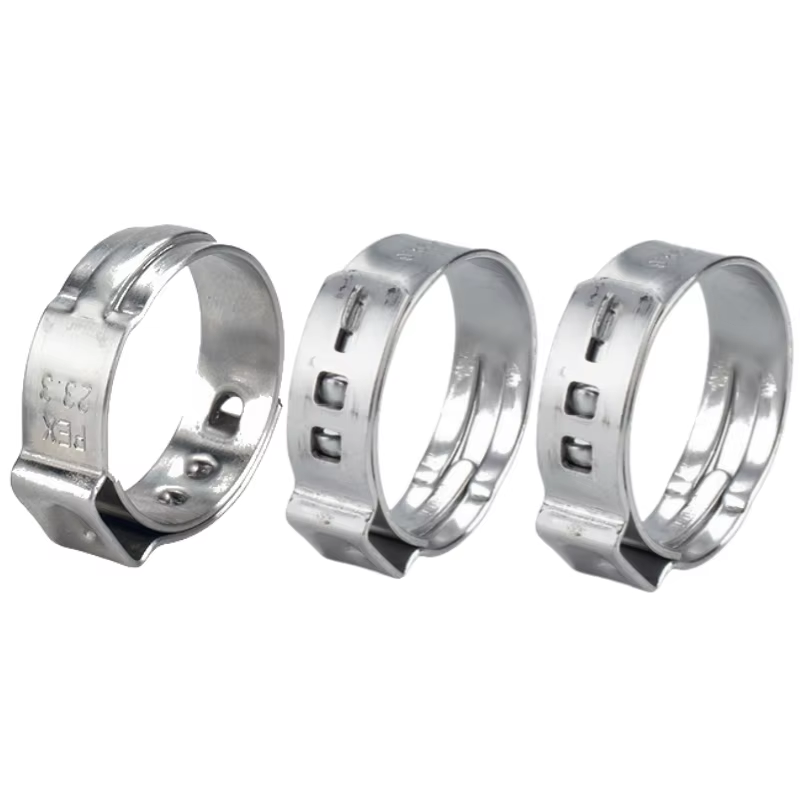
The fundamental advantage of double ear hose clamps lies in their symmetrical ear placement, which ensures balanced compression forces around the entire hose circumference. This design eliminates the weak points commonly found in single-point tightening mechanisms, where stress concentrations can lead to premature failure. The dual ears work in tandem to provide redundant security, meaning that even if one ear experiences slight deformation, the second ear continues to maintain adequate clamping pressure.
Engineers have optimized the ear positioning to maximize the mechanical advantage during installation while maintaining uniform stress distribution. The precise angular separation between ears has been calculated to prevent interference during the crimping process while ensuring complete circumferential contact with the hose surface. This attention to geometric detail translates directly into improved sealing performance and extended service life in demanding applications.
Material Science and Durability
Modern double ear hose clamps utilize advanced stainless steel alloys that provide exceptional resistance to corrosion, temperature extremes, and mechanical fatigue. The material selection process considers not only the immediate application requirements but also long-term environmental exposure factors that could compromise clamp integrity. High-grade stainless steel formulations ensure that these clamps maintain their structural properties even when subjected to aggressive chemicals or extreme temperature variations.
The manufacturing process involves precision forming techniques that preserve the grain structure of the steel while creating the necessary geometric features. Cold forming methods are typically employed to maintain material strength characteristics while achieving the tight tolerances required for consistent performance. Surface finishing treatments further enhance corrosion resistance and provide improved aesthetics for applications where visual appearance is important.
Installation Methodology and Best Practices
Crimping Technique Optimization
Proper installation of double ear hose clamps requires specialized crimping tools designed to compress both ears simultaneously while maintaining parallel alignment. The crimping process must be carefully controlled to achieve the optimal compression ratio that provides secure attachment without over-stressing the hose material. Professional installation tools feature adjustable compression settings that allow technicians to customize the clamping force based on specific hose materials and application requirements.
The sequence of operations during installation begins with proper hose preparation, including cleaning the connection surfaces and ensuring correct hose insertion depth. The clamp positioning must account for the specific geometry of the fitting while maintaining adequate clearance for the crimping tool. Quality installations require verification of ear compression symmetry and final inspection of the completed joint for proper seal formation.
Quality Control and Inspection Procedures
Post-installation inspection protocols for double ear hose clamps involve both visual assessment and functional testing procedures. Visual inspection focuses on ear compression uniformity, hose surface integrity, and proper alignment of all components. The compressed ears should exhibit consistent deformation patterns without cracks, sharp edges, or incomplete closure that could indicate installation problems.
Functional testing typically includes pressure testing at operating conditions to verify seal integrity and leak-free performance. Advanced inspection techniques may involve torque testing to confirm that the clamp maintains adequate holding power under specified load conditions. Documentation of installation parameters and test results provides valuable data for maintenance planning and quality assurance programs.
Performance Advantages in Critical Applications
Vibration Resistance and Fatigue Life
One of the most significant advantages of double ear hose clamps is their superior resistance to vibration-induced loosening compared to threaded fastening systems. The permanent deformation created during the crimping process eliminates the backlash and play that can develop in adjustable clamps over time. This characteristic makes them ideal for mobile equipment, rotating machinery, and transportation applications where constant vibration exposure is unavoidable.
Fatigue testing has demonstrated that double ear hose clamps can withstand millions of stress cycles without significant degradation in clamping force. The distributed stress pattern created by the dual-ear design prevents the stress concentrations that typically initiate fatigue cracks in single-point attachment systems. This enhanced fatigue resistance translates directly into reduced maintenance requirements and improved system reliability.
Temperature Stability and Thermal Cycling
The thermal performance characteristics of double ear hose clamps make them suitable for applications involving significant temperature variations or extreme operating conditions. The material properties of stainless steel construction provide stable mechanical characteristics across a wide temperature range, while the clamp geometry accommodates thermal expansion and contraction of connected components without losing seal integrity.
In high-temperature applications, double ear hose clamps maintain their clamping force even when hose materials experience softening or dimensional changes. The permanent crimp connection prevents the gradual loosening that can occur with adjustable clamps as temperatures fluctuate. This thermal stability is particularly important in automotive cooling systems, industrial heat exchangers, and process equipment where temperature cycling is routine.
Industry Applications and Use Cases
Automotive and Transportation Systems
The automotive industry has embraced double ear hose clamps for numerous critical applications including cooling system connections, fuel line attachments, and emission control components. The reliability requirements of modern vehicles demand fastening solutions that can perform flawlessly throughout the vehicle's service life without requiring maintenance or adjustment. Double ear hose clamps meet these stringent requirements while providing cost-effective manufacturing advantages.
In heavy-duty transportation applications, these clamps secure hydraulic hoses in brake systems, power steering circuits, and transmission cooling lines where failure could result in catastrophic consequences. The permanent attachment method ensures that connections remain secure even under the severe vibration and shock loading conditions encountered in commercial vehicle operations. Fleet maintenance managers report significantly reduced callback rates when double ear hose clamps are specified for critical fluid connections.
Industrial Process Equipment
Manufacturing facilities utilize double ear hose clamps extensively in process equipment where reliable fluid connections are essential for continuous operation. Chemical processing plants, food production facilities, and pharmaceutical manufacturers depend on these clamps to maintain sanitary conditions while preventing costly product contamination. The smooth internal profile of properly installed double ear hose clamps minimizes turbulence and deposit formation in fluid handling systems.
Process engineers specify double ear hose clamps for applications involving aggressive chemicals, high pressures, or sterile environments where traditional clamp designs may fail to meet performance requirements. The corrosion resistance and cleanability of stainless steel construction make these clamps ideal for applications requiring frequent sanitization or exposure to harsh cleaning agents. Their permanent attachment method eliminates the crevices and gaps where bacteria or contaminants might accumulate.
Maintenance and Lifecycle Management
Preventive Maintenance Strategies
While double ear hose clamps are designed for permanent installation, effective maintenance programs include periodic inspection procedures to verify continued performance. Visual inspection schedules should focus on detecting signs of corrosion, mechanical damage, or hose degradation that could compromise system integrity. Early detection of potential problems allows for planned replacement during scheduled maintenance windows rather than emergency repairs.
Maintenance technicians should be trained to recognize the signs of improper installation or service-related degradation that might affect clamp performance. Inspection checklists should include verification of ear compression integrity, hose surface condition, and fitting alignment. Documentation of inspection results provides valuable trending data that can guide maintenance interval optimization and spare parts inventory management.
Replacement and Upgrade Considerations
When replacement of double ear hose clamps becomes necessary due to system modifications or component wear, proper removal techniques must be employed to avoid damaging connected components. Specialized cutting tools designed for clamp removal minimize the risk of hose damage while ensuring safe access to connection points. The permanent nature of these clamps means that replacement typically involves installing new clamps rather than attempting to reuse existing hardware.
Upgrade opportunities may arise when newer clamp designs become available that offer improved performance characteristics or enhanced compatibility with updated hose materials. System engineers should evaluate the cost-benefit relationship of upgrading existing installations versus maintaining current hardware through the remainder of its service life. Standardization on specific clamp designs can provide inventory management advantages while ensuring consistent performance across multiple applications.
FAQ
What makes double ear hose clamps more reliable than traditional worm gear clamps
Double ear hose clamps provide superior reliability through their permanent crimp installation that eliminates the loosening issues common with adjustable worm gear clamps. The dual-ear design distributes clamping forces more evenly around the hose circumference, preventing stress concentrations that can lead to leaks. Additionally, the absence of moving parts or threaded components eliminates wear mechanisms that typically cause traditional clamps to lose clamping force over time.
Can double ear hose clamps be reused after removal
Double ear hose clamps cannot be reused after removal because the crimping process permanently deforms the ears to achieve the required clamping force. Attempting to reuse these clamps would compromise their sealing ability and could result in connection failure. The permanent installation method is specifically designed to provide one-time use reliability that eliminates the variables associated with adjustable fasteners.
What tools are required for proper installation of double ear hose clamps
Professional installation of double ear hose clamps requires specialized crimping tools designed to compress both ears simultaneously while maintaining proper alignment. These tools typically feature adjustable compression settings to accommodate different clamp sizes and hose materials. Quality installations also benefit from go/no-go gauges that verify proper ear compression and ensure consistent results across multiple installations.
How do environmental conditions affect the performance of double ear hose clamps
Environmental factors such as temperature extremes, chemical exposure, and UV radiation can affect double ear hose clamps, though high-quality stainless steel construction provides excellent resistance to most conditions. Temperature cycling may cause dimensional changes in connected components, but the permanent crimp connection accommodates these variations better than adjustable alternatives. Chemical compatibility should be verified for specific applications, and protective coatings may be specified for extreme environments to ensure optimal longevity.