
 EN
EN
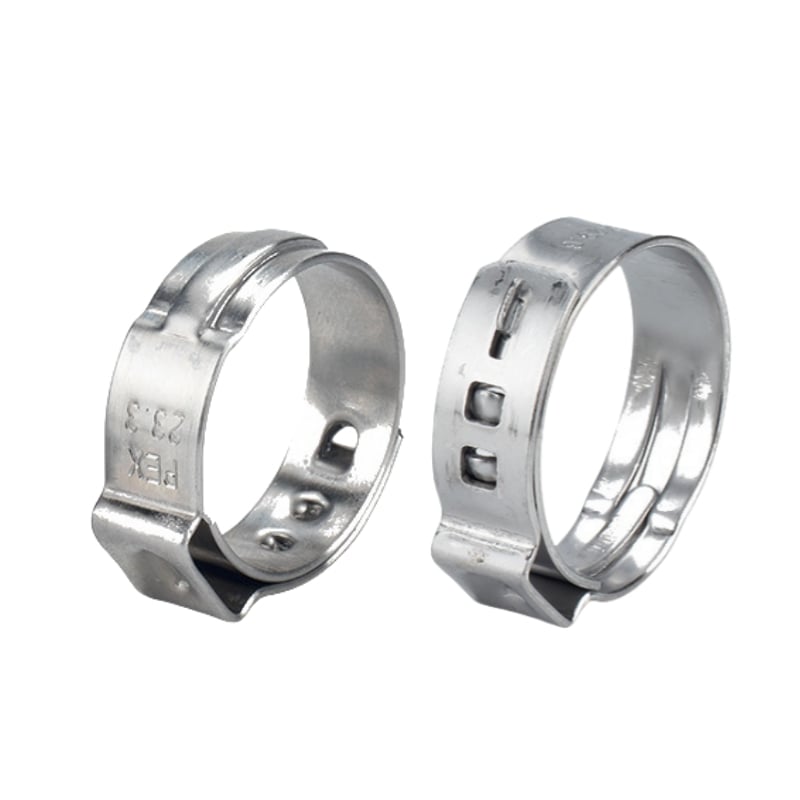
Industrial facilities and automotive applications face ongoing challenges with securing hose connections that maintain integrity under varying pressure conditions. Traditional clamp solutions often require frequent adjustments and replacement, leading to increased maintenance costs and operational downtime. Double ear hose clamps represent an advanced fastening solution designed to address these persistent issues through superior sealing performance and extended service life. These specialized clamps utilize dual crimping ears that distribute clamping force more evenly around the hose circumference, creating a more reliable seal compared to conventional single-ear alternatives.
Understanding Double Ear Hose Clamp Technology
Construction and Design Principles
The fundamental design of double ear hose clamps incorporates two strategically positioned crimping ears that work in tandem to secure hose connections. Unlike traditional worm gear clamps that rely on threaded adjustment mechanisms, these clamps utilize permanent crimping technology that eliminates the possibility of loosening over time. The dual-ear configuration ensures that clamping pressure remains consistent around the entire hose circumference, preventing the formation of weak points that commonly occur with single-point clamping systems.
Manufacturing standards for quality double ear hose clamps typically involve high-grade stainless steel construction, providing excellent corrosion resistance in harsh industrial environments. The crimping ears are precisely engineered to deform uniformly when compressed, creating a secure mechanical bond that maintains its integrity throughout the operational lifecycle. This design approach eliminates the need for periodic retightening, which is a common maintenance requirement with adjustable clamp systems.
Material Properties and Performance Characteristics
Premium double ear hose clamps utilize 300-series stainless steel alloys that offer superior resistance to chemical exposure, temperature fluctuations, and mechanical stress. The material selection directly impacts long-term performance, as inferior metals may experience creep deformation or corrosion that compromises sealing effectiveness. Quality manufacturers implement strict material testing protocols to ensure consistent performance across various operating conditions.
The crimping mechanism of these specialized clamps creates a cold-formed joint that actually strengthens over time through work hardening effects. This phenomenon results in improved clamping force retention compared to threaded systems that may experience material fatigue. The absence of moving parts also eliminates potential failure points associated with screw threads or adjustment mechanisms that can seize or strip under adverse conditions.
Time-Saving Benefits in Installation and Maintenance
Streamlined Installation Process
Installing double ear hose clamps requires significantly less time compared to traditional adjustable clamps. The installation process involves simply positioning the clamp around the hose and using specialized crimping pliers to compress both ears simultaneously. This one-step installation eliminates the need for precise torque measurements or multiple adjustment cycles required with threaded clamp systems.
Professional technicians can complete installations up to 60% faster when using properly sized double ear hose clamps compared to worm gear alternatives. The elimination of torque specifications and adjustment procedures reduces the skill level required for proper installation, allowing less experienced personnel to achieve consistent results. This efficiency improvement becomes particularly significant in high-volume assembly operations or maintenance situations involving multiple connections.
Reduced Maintenance Requirements
Once properly installed, double ear hose clamps require virtually no ongoing maintenance throughout their service life. The permanent crimped connection eliminates the need for periodic retightening that is essential with threaded clamp systems. This maintenance reduction translates directly into labor cost savings and reduced equipment downtime for inspection and adjustment procedures.
Field studies in automotive and industrial applications demonstrate that facilities using double ear hose clamps experience significantly fewer leak-related service calls compared to those relying on adjustable alternatives. The elimination of maintenance-induced connection disturbance also reduces the risk of introducing contaminants or creating new leak paths during routine servicing.
Cost Analysis and Economic Benefits
Initial Investment Considerations
While double ear hose clamps typically carry a higher initial purchase price compared to basic worm gear clamps, the total cost of ownership analysis reveals significant long-term savings. The premium pricing reflects superior materials, precision manufacturing, and specialized tooling requirements for proper installation. However, facilities must consider the complete lifecycle costs including installation labor, maintenance requirements, and replacement frequency when evaluating economic benefits.
The specialized crimping tools required for double ear hose clamps represent an additional upfront investment that must be factored into cost calculations. Quality crimping pliers designed for professional use typically cost between $150-$400 depending on size range and manufacturer specifications. This tooling investment becomes economically justified when spread across multiple installations or when considering the labor savings achieved through faster installation times.
Long-Term Operational Savings
Extended service life represents the primary economic advantage of double ear hose clamps in industrial applications. Quality installations can provide 10-15 years of reliable service without maintenance intervention, compared to 2-5 years for conventional threaded clamps requiring periodic adjustment. This longevity reduces replacement part costs and eliminates scheduled maintenance labor expenses associated with connection inspection and retightening procedures.
Leak prevention capabilities of properly installed double ear hose clamps contribute additional cost savings through reduced fluid loss, contamination prevention, and environmental compliance benefits. Facilities handling expensive hydraulic fluids, coolants, or process chemicals realize direct savings through improved connection reliability. The elimination of leak-related equipment damage also prevents costly secondary failures that can occur when connections fail unexpectedly.
Application-Specific Performance Advantages
Automotive and Transportation Systems
Automotive applications benefit significantly from the vibration resistance characteristics of double ear hose clamps. Engine compartment installations experience constant vibration and temperature cycling that can loosen threaded connections over time. The permanent crimped design provides superior resistance to these environmental stresses, maintaining seal integrity throughout the vehicle's operational life.
Fleet maintenance operations report substantial cost reductions when using double ear hose clamps for coolant system connections. The elimination of routine hose clamp inspections and adjustments reduces preventive maintenance labor requirements while improving overall system reliability. This reliability improvement is particularly valuable for commercial vehicle operations where unexpected failures result in significant operational costs and schedule disruptions.
Industrial Process Applications
Chemical processing facilities utilize double ear hose clamps for connections involving corrosive media where connection reliability is critical for safety and environmental compliance. The superior sealing performance reduces the risk of chemical releases that can trigger expensive emergency response procedures and regulatory violations. The permanent installation also eliminates the need for confined space entry to perform routine maintenance on process connections.
High-pressure hydraulic systems benefit from the uniform clamping force distribution provided by double ear hose clamps. Unlike point-loading created by threaded clamps, the dual-ear design distributes stress more evenly around the hose circumference, reducing the likelihood of hose damage or premature failure. This characteristic is particularly important in applications involving pressure cycling or shock loading conditions.
Installation Best Practices and Technical Considerations
Proper Sizing and Selection Criteria
Selecting appropriate double ear hose clamps requires careful consideration of hose outer diameter, operating pressure, and temperature range. Undersized clamps may not provide adequate sealing force, while oversized units can damage hose materials or create stress concentrations. Manufacturers typically provide detailed sizing charts that specify clamp dimensions based on hose specifications and application requirements.
Material compatibility between the clamp and system components must be evaluated to prevent galvanic corrosion or chemical degradation. Stainless steel double ear hose clamps offer broad compatibility with most industrial applications, but specific alloy selection may be required for extreme chemical exposure or temperature conditions. Professional consultation with clamp manufacturers can help ensure optimal material selection for challenging applications.
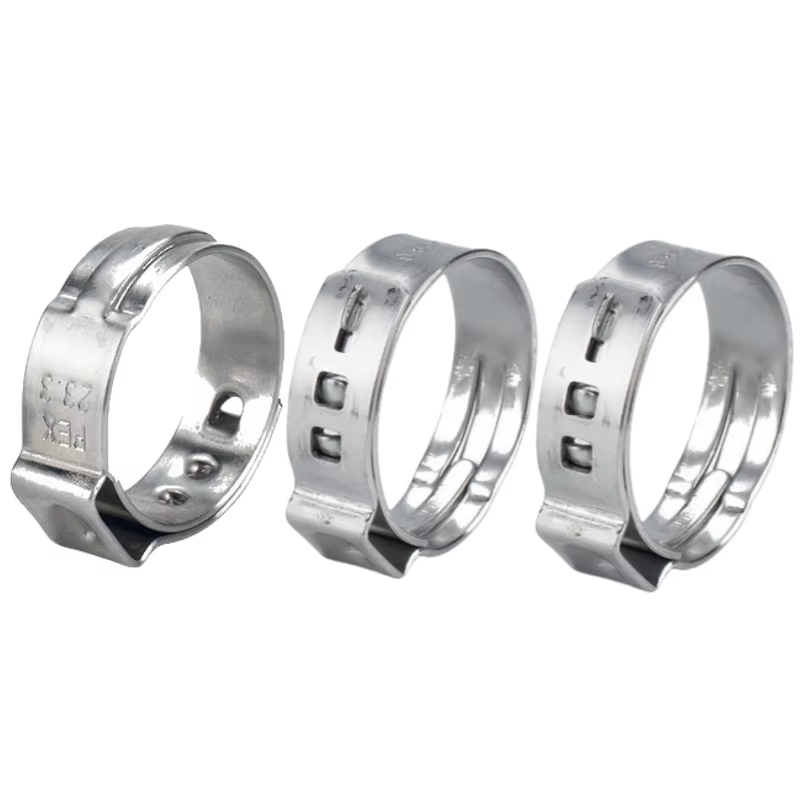
Crimping Technique and Quality Control
Proper crimping technique is essential for achieving optimal performance from double ear hose clamps. The crimping operation must compress both ears simultaneously and uniformly to ensure balanced clamping force distribution. Incomplete or uneven crimping can result in reduced sealing effectiveness and potential connection failure under operating conditions.
Quality control procedures should include visual inspection of crimped connections to verify proper ear deformation and alignment. Properly crimped double ear hose clamps exhibit uniform ear compression with smooth, rounded profiles indicating complete material flow. Sharp edges or incomplete closure suggest inadequate crimping force or improper tool positioning that may compromise connection reliability.
Comparative Analysis with Alternative Clamp Systems
Performance Comparison with Worm Gear Clamps
Worm gear clamps offer adjustability advantages for applications requiring frequent disconnection or pressure adjustment capabilities. However, this adjustability comes at the cost of long-term reliability as threaded mechanisms can loosen, corrode, or seize over time. Double ear hose clamps sacrifice adjustability for superior long-term sealing performance and maintenance-free operation.
Pressure retention testing demonstrates that double ear hose clamps maintain consistent sealing force throughout extended service periods, while worm gear clamps may experience gradual force reduction due to material relaxation and thread wear. This performance difference becomes more pronounced in high-vibration environments where threaded connections are particularly susceptible to loosening.
Advantages Over Single Ear Clamp Designs
Single ear clamp systems provide some benefits of permanent installation but may create localized stress concentrations that can damage hose materials or create leak paths. The dual-ear configuration of advanced clamp designs distributes clamping forces more evenly, reducing peak stress levels and improving overall connection reliability.
Installation consistency is generally superior with double ear hose clamps as the dual crimping points provide visual confirmation of proper installation. Single ear systems may appear properly installed even when crimping force is insufficient, leading to potential field failures that are difficult to predict during initial installation procedures.
FAQ
What tools are required for installing double ear hose clamps
Installing double ear hose clamps requires specialized crimping pliers designed to compress both ears simultaneously. Professional-grade tools feature adjustable jaw spacing to accommodate different clamp sizes and provide consistent crimping force. Basic hand-operated crimpers work well for light-duty applications, while pneumatic or hydraulic tools may be necessary for high-volume installations or larger clamp sizes.
How do I determine the correct size for double ear hose clamps
Proper sizing requires measuring the hose outer diameter and consulting manufacturer sizing charts that account for hose material and wall thickness variations. The clamp should fit snugly around the hose without excessive compression that could damage the hose material. Most manufacturers provide sizing tolerances that ensure proper sealing force while preventing over-compression issues.
Can double ear hose clamps be reused after installation
Double ear hose clamps are designed for permanent installation and cannot be reused once crimped. The crimping process permanently deforms the metal ears, creating a one-time use connection. Attempting to remove or adjust crimped clamps typically results in clamp damage and potential hose injury. This permanent installation characteristic is fundamental to their superior long-term reliability.
What are the temperature limitations for stainless steel double ear hose clamps
Standard 300-series stainless steel double ear hose clamps typically operate effectively in temperature ranges from -40°F to 500°F (-40°C to 260°C). Higher temperature applications may require specialized alloys or alternative materials to maintain mechanical properties and corrosion resistance. Temperature cycling effects should also be considered as repeated expansion and contraction can affect connection integrity over time.