 EN
EN
Original Equipment Manufacturers (OEMs) across diverse industrial sectors rely heavily on specialized fastening solutions to ensure their products meet stringent performance standards. When evaluating steel hose clamps for industrial applications, procurement professionals must consider multiple technical criteria that directly impact system reliability, operational efficiency, and long-term maintenance costs. The selection process involves thorough analysis of material specifications, dimensional tolerances, corrosion resistance properties, and manufacturing quality standards that align with specific application requirements.
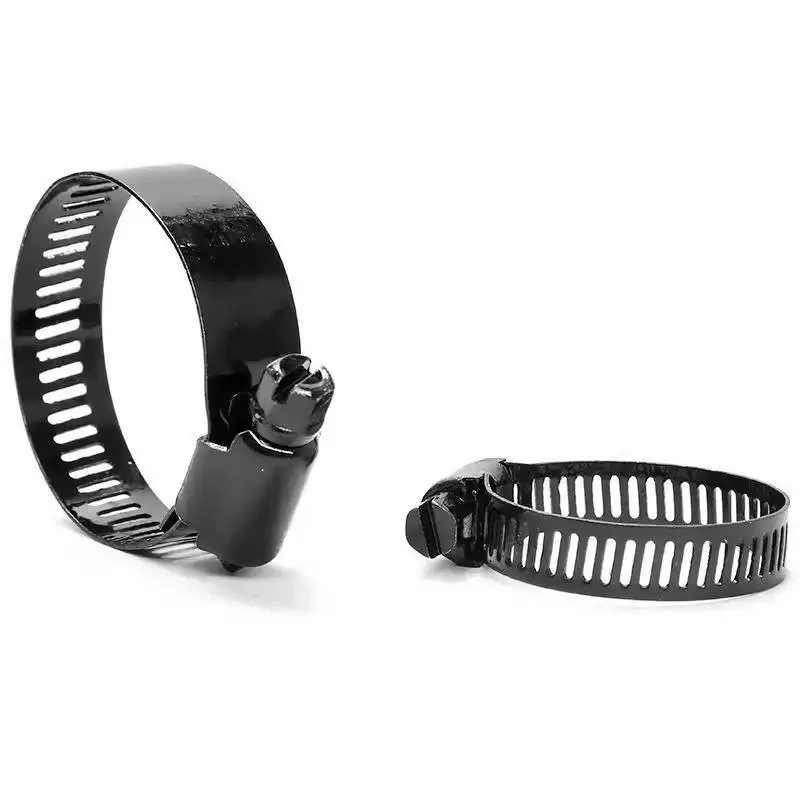
Industrial buyers understand that steel hose clamps serve as critical components in fluid transfer systems, automotive assemblies, HVAC installations, and marine applications where secure connections prevent costly system failures. The assessment methodology employed by experienced procurement teams encompasses comprehensive evaluation protocols that examine both immediate performance characteristics and projected service life under demanding operational conditions. This systematic approach ensures that selected steel hose clamps deliver consistent clamping force while maintaining structural integrity throughout extended service intervals.
Material Composition and Grade Specifications
Stainless Steel Alloy Selection
OEM buyers prioritize stainless steel compositions that offer optimal balance between mechanical strength and environmental resistance for their specific applications. Grade 304 stainless steel represents the most commonly specified material for general-purpose steel hose clamps, providing excellent corrosion resistance in standard industrial environments while maintaining cost-effectiveness for high-volume procurement. However, applications involving exposure to chlorides, acidic conditions, or elevated temperatures often require upgraded materials such as Grade 316 stainless steel, which incorporates molybdenum content for enhanced chemical resistance.
The carbon content within stainless steel alloys significantly influences the mechanical properties and corrosion behavior of steel hose clamps under operational stress. Low-carbon variants minimize carbide precipitation at grain boundaries, thereby reducing susceptibility to intergranular corrosion in heat-affected zones created during manufacturing processes. Industrial buyers evaluate material certifications and mill test reports to verify compliance with international standards such as ASTM A240, ensuring that procured steel hose clamps meet specified chemical composition requirements for their intended service environment.
Surface Treatment and Coating Options
Surface preparation techniques applied to steel hose clamps directly affect their long-term performance in corrosive environments, prompting OEM buyers to specify appropriate finishing processes during supplier evaluation. Passivation treatments remove free iron contamination from machined surfaces while promoting formation of protective chromium oxide layers that enhance corrosion resistance. Electropolishing procedures further improve surface smoothness and chemical inertness, making them particularly valuable for pharmaceutical, food processing, and semiconductor applications where contamination control remains paramount.
Specialized coating applications extend the service life of steel hose clamps in challenging operational environments where standard stainless steel may prove insufficient. Fluoropolymer coatings provide exceptional chemical resistance and low friction characteristics, while ceramic-based treatments offer superior wear resistance and thermal stability. OEM buyers evaluate coating adhesion properties, thickness uniformity, and environmental compliance certifications to ensure that treated steel hose clamps maintain their protective characteristics throughout anticipated service intervals.
Dimensional Accuracy and Tolerance Management
Clamping Range Specifications
Precise dimensional control ensures that steel hose clamps provide consistent clamping force across their specified diameter range while accommodating normal manufacturing variations in hose and tube assemblies. OEM buyers analyze tolerance specifications for both minimum and maximum clamping diameters, verifying that selected products maintain adequate sealing pressure without causing hose deformation or premature wear. The overlap range between adjacent clamp sizes influences inventory management strategies and standardization opportunities within complex assembly operations.
Band width and thickness parameters significantly impact the stress distribution characteristics of Steel Hose Clamps under operational loads, requiring careful evaluation during the selection process. Wider bands distribute clamping forces over larger contact areas, reducing localized stress concentrations that could lead to hose damage or premature failure. However, increased band width may create clearance issues in confined installation spaces, necessitating trade-off analysis between optimal stress distribution and geometric constraints imposed by specific application requirements.
Threading and Engagement Quality
Thread pitch accuracy and surface finish quality determine the efficiency and reliability of adjustment mechanisms in worm-drive steel hose clamps, directly affecting installation consistency and long-term performance. OEM buyers examine thread engagement specifications to ensure adequate contact area between the adjustment screw and band perforations, preventing premature wear or mechanical failure under cyclic loading conditions. Proper thread lubrication and anti-seize treatments further enhance adjustment reliability while facilitating field maintenance activities.
Geometric precision in perforation patterns affects load distribution and adjustment smoothness in steel hose clamps equipped with worm-drive mechanisms. Uniform hole spacing and consistent edge quality minimize stress concentrations while ensuring smooth screw advancement during installation and adjustment procedures. Industrial buyers evaluate manufacturing process controls and quality assurance protocols to verify that procured steel hose clamps maintain specified geometric tolerances throughout production runs.
Performance Testing and Validation Methods
Mechanical Strength Assessment
Comprehensive mechanical testing protocols validate the load-bearing capacity and fatigue resistance of steel hose clamps under simulated service conditions, providing OEM buyers with quantitative performance data for informed selection decisions. Tensile strength measurements determine the maximum load that clamp assemblies can withstand before mechanical failure, while yield strength values indicate the onset of permanent deformation under operational stress. These parameters establish safe working load limits and appropriate safety factors for specific application requirements.
Fatigue testing procedures evaluate the long-term durability of steel hose clamps subjected to cyclic loading conditions representative of actual service environments. Vibration resistance tests simulate the dynamic loading conditions encountered in automotive, marine, and industrial machinery applications where steel hose clamps must maintain secure connections despite continuous mechanical disturbance. OEM buyers analyze fatigue life data to establish appropriate maintenance intervals and replacement schedules for critical system components.
Environmental Resistance Evaluation
Salt spray testing protocols assess the corrosion resistance performance of steel hose clamps under accelerated exposure conditions that simulate marine and industrial environments with elevated chloride concentrations. Standard test procedures such as ASTM B117 provide comparative performance data for different material grades and surface treatments, enabling OEM buyers to select appropriate products for specific environmental conditions. Extended exposure testing reveals the progression of corrosion damage and helps establish realistic service life expectations for various operating environments.
Temperature cycling tests evaluate the dimensional stability and mechanical properties of steel hose clamps under thermal stress conditions representative of automotive engine compartments, industrial heating systems, and outdoor installations. Coefficient of thermal expansion matching between clamp materials and connected components prevents the development of excessive stress concentrations that could compromise joint integrity. OEM buyers review thermal performance data to ensure that selected steel hose clamps maintain consistent clamping force across anticipated temperature ranges.
Quality Assurance and Certification Requirements
Manufacturing Process Controls
Statistical process control implementation ensures consistent quality and dimensional accuracy in steel hose clamps throughout production runs, providing OEM buyers with confidence in product reliability and performance consistency. Manufacturing facilities equipped with automated inspection systems and real-time quality monitoring capabilities demonstrate their commitment to maintaining specified tolerances and material properties. Documented quality management systems certified to ISO 9001 standards indicate systematic approaches to process control and continuous improvement initiatives.
Traceability protocols enable OEM buyers to track individual steel hose clamps from raw material receipt through final inspection and shipment, facilitating root cause analysis in the event of field performance issues. Batch identification systems and comprehensive documentation practices support quality investigations and enable targeted corrective actions when necessary. Advanced manufacturers implement digital tracking systems that provide real-time visibility into production status and quality metrics throughout the manufacturing process.
Compliance and Standards Adherence
Industry-specific standards compliance ensures that steel hose clamps meet established performance criteria and safety requirements for their intended applications, reducing liability exposure and regulatory compliance risks for OEM buyers. Automotive applications typically require compliance with ASTM, SAE, or DIN standards that specify material properties, dimensional tolerances, and performance characteristics appropriate for vehicular service environments. Marine applications may require additional certifications for corrosion resistance and environmental durability under saltwater exposure conditions.
Third-party testing and certification services provide independent verification of steel hose clamps performance claims and specification compliance, offering OEM buyers additional assurance regarding product quality and reliability. Accredited testing laboratories conduct standardized evaluation procedures that eliminate potential bias in manufacturer-provided performance data. Regular surveillance audits of manufacturing facilities ensure ongoing compliance with certified quality management systems and continuous adherence to specified production standards.
Cost Analysis and Value Engineering
Total Cost of Ownership Considerations
OEM buyers evaluate the complete lifecycle costs associated with steel hose clamps procurement, installation, maintenance, and eventual replacement to optimize long-term value and minimize total ownership expenses. Initial purchase price represents only a portion of the total cost equation, with installation labor, inventory carrying costs, and maintenance requirements contributing significantly to overall expenditure. Premium steel hose clamps with enhanced durability characteristics may justify higher initial costs through reduced maintenance frequency and extended service intervals.
Failure costs associated with steel hose clamps performance issues can significantly exceed initial procurement savings, particularly in critical applications where system downtime results in substantial operational losses. OEM buyers analyze historical failure data and warranty claims to identify cost-effective quality levels that minimize total risk exposure. Supplier partnerships that include technical support, training, and rapid response capabilities add value beyond basic product functionality and contribute to overall system reliability.
Volume Pricing and Supply Chain Optimization
Strategic sourcing approaches enable OEM buyers to leverage purchasing volume for improved pricing while maintaining quality standards and delivery performance requirements. Long-term supply agreements with qualified steel hose clamps manufacturers provide price stability and guaranteed capacity allocation during periods of high market demand. Supplier diversity initiatives and dual-sourcing strategies reduce supply chain risks while maintaining competitive pricing pressure on primary suppliers.
Inventory optimization strategies balance carrying costs against stockout risks for steel hose clamps with varying demand patterns and lead time requirements. Just-in-time delivery programs minimize inventory investment while ensuring adequate component availability for production schedules. Vendor-managed inventory arrangements transfer inventory responsibility to suppliers while maintaining service level agreements that support manufacturing flexibility and responsiveness to customer demand variations.
FAQ
What material grades are most commonly specified for industrial steel hose clamps
Grade 304 stainless steel represents the most frequently specified material for general industrial steel hose clamps applications due to its excellent balance of corrosion resistance, mechanical strength, and cost-effectiveness. For more demanding environments involving chemical exposure, elevated temperatures, or marine conditions, Grade 316 stainless steel provides enhanced corrosion resistance through increased molybdenum content. Specialized applications may require exotic alloys such as Inconel or Hastelloy for extreme service conditions.
How do OEM buyers verify the quality and performance of steel hose clamps suppliers
OEM buyers typically conduct comprehensive supplier audits that evaluate manufacturing capabilities, quality management systems, testing facilities, and certification compliance for steel hose clamps production. Third-party testing services provide independent verification of material properties and performance characteristics, while supplier scorecards track delivery performance, quality metrics, and customer service responsiveness over time. Regular quality reviews and continuous improvement initiatives ensure ongoing supplier performance optimization.
What testing protocols are essential for validating steel hose clamps performance in critical applications
Critical applications require comprehensive testing protocols including tensile strength verification, fatigue resistance evaluation, corrosion testing under accelerated conditions, and temperature cycling assessment for steel hose clamps validation. Vibration testing simulates dynamic loading conditions while pressure testing validates sealing effectiveness under operational loads. Environmental testing protocols may include UV exposure, ozone resistance, and chemical compatibility assessment depending on specific application requirements.
How do installation requirements influence steel hose clamps selection criteria for OEM applications
Installation accessibility significantly influences steel hose clamps selection, with confined spaces requiring compact designs and specialized tooling requirements. Torque specifications must align with available installation equipment and operator skill levels while maintaining consistent clamping force. Automation compatibility considerations include consistent dimensions, orientation features, and packaging requirements that support robotic or semi-automated installation processes in high-volume manufacturing operations.
Table of Contents
- Material Composition and Grade Specifications
- Dimensional Accuracy and Tolerance Management
- Performance Testing and Validation Methods
- Quality Assurance and Certification Requirements
- Cost Analysis and Value Engineering
-
FAQ
- What material grades are most commonly specified for industrial steel hose clamps
- How do OEM buyers verify the quality and performance of steel hose clamps suppliers
- What testing protocols are essential for validating steel hose clamps performance in critical applications
- How do installation requirements influence steel hose clamps selection criteria for OEM applications