
 EN
EN

The design of a screw fundamentally determines its fastening performance in machinery applications, influencing everything from torque requirements to long-term structural integrity. Modern industrial equipment relies heavily on precise screw engineering to maintain operational efficiency and safety standards. Understanding how various screw design elements impact performance enables engineers and manufacturers to select optimal fastening solutions for specific machinery requirements. The relationship between screw geometry and mechanical performance has evolved significantly with advances in materials science and manufacturing precision.
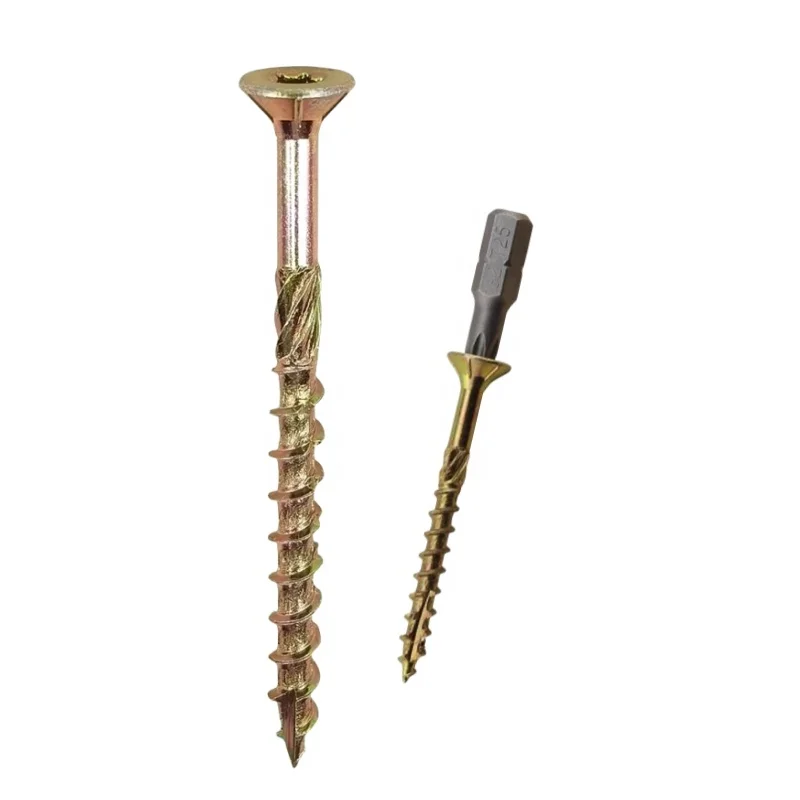
Thread Geometry and Load Distribution Characteristics
Thread Pitch and Mechanical Advantage
Thread pitch directly affects the mechanical advantage of any screw system, determining how much linear force is generated per unit of rotational torque applied. Fine-pitch threads provide greater mechanical advantage and superior holding power but require more rotations to achieve full engagement. This characteristic makes fine-pitch screw designs particularly valuable in precision machinery where consistent clamping force is critical. Coarse-pitch threads, conversely, allow for faster installation and are less susceptible to cross-threading during assembly processes.
The relationship between thread pitch and load distribution becomes especially important in high-vibration environments common in industrial machinery. A properly designed screw thread distributes loads across multiple thread engagements, preventing stress concentration that could lead to premature failure. Engineers must balance the trade-offs between installation speed and ultimate holding strength when selecting thread pitch specifications for machinery applications.
Thread Angle and Stress Concentration
The included angle of screw threads significantly impacts both insertion torque and the distribution of forces within the threaded connection. Standard 60-degree thread angles provide excellent balance between manufacturing efficiency and mechanical performance. However, specialized machinery applications may require modified thread angles to optimize load transfer characteristics or reduce stress concentrations in critical components.
Sharp thread angles can create stress concentration points that become failure initiation sites under cyclic loading conditions. Modern screw design incorporates radius transitions at thread roots to minimize these stress concentrations while maintaining adequate thread engagement. The optimization of thread angle and root radius represents a crucial design consideration for machinery subjected to dynamic loading conditions.
Head Design Impact on Installation and Performance
Drive System Selection and Torque Transfer
The choice of drive system for a screw head directly affects both installation efficiency and the maximum torque that can be reliably transmitted during assembly. Phillips and Robertson drives remain popular for general applications, while Torx and hex drives provide superior torque transmission capabilities essential for high-performance machinery fastening. Each drive system presents unique advantages in terms of tool engagement, cam-out resistance, and driver tool longevity.
Advanced screw designs incorporate multiple drive features to accommodate different installation tools and torque requirements throughout the machinery assembly process. The geometry of the drive recess must be precisely engineered to prevent premature wear while ensuring consistent torque transmission across thousands of installation cycles. Manufacturing tolerances for drive geometry become increasingly critical as torque requirements increase in modern machinery applications.
Head Profile and Load Transfer Characteristics
The profile of a screw head determines how loads are transferred from the fastener to the assembled components, affecting both immediate installation performance and long-term joint integrity. Flat head screws provide flush mounting capabilities but concentrate loads at the countersink interface, while round and hex heads distribute loads over broader bearing surfaces. Pan head designs offer excellent load distribution characteristics while maintaining relatively low profiles suitable for machinery applications with clearance restrictions.
Specialized head designs incorporate features like integral washers or flanges to further optimize load distribution and eliminate the need for separate hardware components. These integrated designs reduce assembly complexity while ensuring consistent performance across varying material combinations common in machinery construction. The selection of appropriate head geometry must consider both mechanical performance requirements and manufacturing cost implications.
Material Selection and Surface Treatment Effects
Base Material Properties and Performance Characteristics
The base material of a screw determines its fundamental mechanical properties, including tensile strength, shear resistance, and fatigue performance under cyclic loading conditions. Carbon steel provides excellent strength-to-cost ratios for general machinery applications, while stainless steel offers superior corrosion resistance in harsh operating environments. Alloy steels enable the production of high-strength screws capable of withstanding extreme loads common in heavy machinery applications.
Material selection must account for the operating environment, expected service life, and compatibility with mating materials throughout the machinery system. Galvanic corrosion potential between dissimilar metals can significantly reduce the effective service life of screw fasteners in machinery applications. Advanced material specifications often include specific chemistry requirements to optimize both mechanical performance and environmental resistance characteristics.
Surface Treatments and Friction Characteristics
Surface treatments applied to screw fasteners significantly affect installation torque requirements, corrosion resistance, and long-term performance in machinery applications. Zinc plating provides cost-effective corrosion protection while maintaining relatively low friction coefficients during installation. Specialized coatings like zinc-nickel alloys or organic topcoats offer enhanced protection in severe service environments while potentially modifying friction characteristics.
The relationship between surface treatment and friction coefficient directly impacts the torque-tension relationship during screw installation, affecting both assembly procedures and final clamp load achieved. Thread-locking compounds applied during manufacturing can provide additional security against loosening while potentially increasing installation torque requirements. Understanding these interactions enables engineers to specify appropriate installation procedures and torque values for optimal machinery performance.
Self-Tapping and Thread-Forming Design Considerations
Cutting Edge Geometry and Material Penetration
Self-tapping screw designs incorporate cutting edges that must efficiently penetrate and remove material while forming threads in the receiving component. The geometry of these cutting edges affects both installation torque and the quality of the formed threads, directly impacting the ultimate holding strength of the connection. Sharp cutting angles reduce installation forces but may be more susceptible to wear during repeated installations or when encountering hard materials.
Thread-forming screws displace rather than remove material during installation, creating stronger thread engagement in many materials commonly used in machinery construction. The design of thread-forming features requires careful optimization to prevent excessive installation forces while ensuring adequate thread engagement depth. These screw types often provide superior holding strength compared to conventional threaded fasteners in thin-wall applications.
Point Design and Pilot Hole Requirements
The point design of self-tapping and thread-forming screws determines pilot hole requirements and installation characteristics in various materials. Sharp points enable installation without pre-drilling in soft materials but may require pilot holes when used with harder substrates common in machinery applications. Blunt points provide better centering and reduced splitting tendency in brittle materials but typically require larger pilot holes.
Advanced point designs incorporate multiple cutting edges or specialized geometries to optimize performance across a range of material types and thicknesses. The selection of appropriate point design must consider the specific materials being joined, available installation equipment, and required production rates. Proper point design significantly affects both installation efficiency and the consistency of final assembly quality in machinery production environments.
Length and Engagement Considerations for Optimal Performance
Thread Engagement Length and Load Capacity
The length of thread engagement between a screw and its mating component directly determines the load capacity of the fastened joint, with insufficient engagement leading to premature thread stripping or failure. Industry standards typically require minimum thread engagement lengths equivalent to one times the screw diameter for steel assemblies, though machinery applications may require greater engagement to accommodate dynamic loading conditions. Excessive thread engagement beyond optimal lengths provides diminishing returns while potentially increasing material costs and assembly complexity.
The distribution of loads across engaged threads follows predictable patterns, with the first few threads carrying disproportionately higher loads compared to threads deeper in the engagement. Modern screw design may incorporate variable thread forms or modified lead threads to more evenly distribute loads across the entire engagement length. This optimization becomes particularly important in high-stress machinery applications where maximizing joint efficiency is critical for overall system performance.
Grip Length and Clamping Force Optimization
The grip length of a screw, representing the total thickness of materials being clamped together, significantly affects the clamping force achieved for a given installation torque. Optimal screw length provides adequate thread engagement while minimizing the unthreaded shank length within the grip zone to maximize clamping efficiency. Excessive screw length can reduce clamping force by increasing the elastic stretch of the fastener under load.
Machinery applications often involve multiple materials with varying elastic properties, requiring careful consideration of grip length optimization to ensure consistent clamping forces across assembled components. The relationship between screw length, material properties, and final clamping force must be evaluated during the design process to prevent loosening or inadequate joint preload. Advanced analysis techniques can predict optimal screw lengths for complex multi-material assemblies common in modern machinery construction.
FAQ
How does thread pitch affect the holding strength of screws in machinery applications
Thread pitch directly influences holding strength through its effect on thread engagement area and mechanical advantage. Fine-pitch threads provide greater surface contact area between the screw and mating threads, resulting in higher ultimate tensile and shear strengths. However, fine threads are more susceptible to damage from contamination or corrosion, which can significantly reduce their effective holding capacity in harsh machinery environments. The optimal thread pitch represents a balance between maximum holding strength and reliability under service conditions.
What role does screw head design play in preventing loosening under vibration
Screw head design affects loosening resistance primarily through its influence on the friction characteristics at the bearing surface and the preload achieved during installation. Heads with integrated washers or flanged designs distribute loads over larger areas, reducing bearing stress and maintaining higher preloads under dynamic conditions. Additionally, the torque transmission capabilities of different head designs affect the consistency of initial preload, with higher-torque drive systems generally providing more reliable preload levels that resist loosening under vibration.
How do surface treatments on screws impact their performance in corrosive environments
Surface treatments provide barrier protection against corrosive elements while potentially modifying the friction characteristics during installation and service. Zinc plating offers basic corrosion protection suitable for indoor machinery applications, while more advanced treatments like zinc-nickel alloys or specialized organic coatings provide enhanced protection for outdoor or chemically aggressive environments. The selection of surface treatment must consider both the corrosive environment and the required service life, as some high-performance coatings may increase material costs but provide significantly extended service intervals.
What factors determine the optimal length for screws in machinery assembly applications
Optimal screw length depends on the required thread engagement, grip length of assembled materials, and desired clamping force characteristics. Industry guidelines typically specify minimum thread engagement equivalent to one to two times the screw diameter, depending on the materials involved and loading conditions. The grip length should be minimized to maximize clamping efficiency while ensuring adequate engagement, with consideration given to material compression under load and thermal expansion effects. Machinery applications may require longer screws to accommodate access limitations or to provide adjustment capability during assembly and service procedures.
Table of Contents
- Thread Geometry and Load Distribution Characteristics
- Head Design Impact on Installation and Performance
- Material Selection and Surface Treatment Effects
- Self-Tapping and Thread-Forming Design Considerations
- Length and Engagement Considerations for Optimal Performance
-
FAQ
- How does thread pitch affect the holding strength of screws in machinery applications
- What role does screw head design play in preventing loosening under vibration
- How do surface treatments on screws impact their performance in corrosive environments
- What factors determine the optimal length for screws in machinery assembly applications