 EN
EN
Industrial applications demand reliable and secure connections for fluid transfer systems, and selecting the right clamping solution can make the difference between operational success and costly failures. Double ear hose clamps have emerged as a superior choice for professionals who require maximum holding strength and consistent performance under demanding conditions. These specialized fasteners represent an evolution in hose clamping technology, offering enhanced grip characteristics and improved resistance to loosening compared to traditional single-ear alternatives.
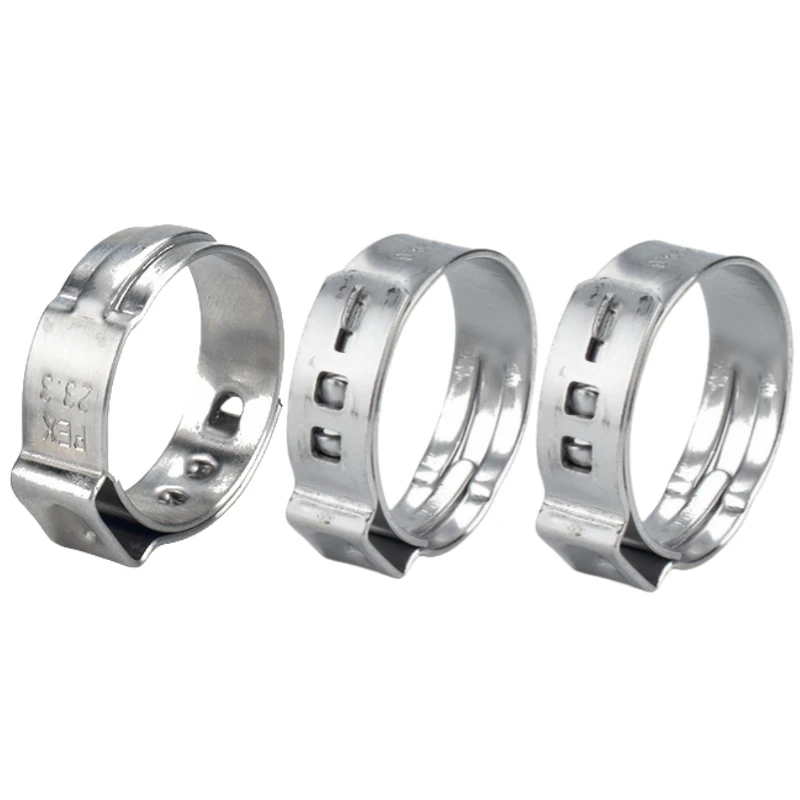
The engineering principles behind these clamps create a more balanced distribution of clamping force around the entire circumference of the hose connection. This uniform pressure application prevents the formation of weak spots that commonly develop with other clamping methods, ensuring that your critical fluid systems maintain their integrity throughout extended operational periods. Understanding the specific advantages of this design helps explain why so many industrial facilities are making the transition to double ear configurations for their most demanding applications.
Engineering Design and Construction Principles
Dual Ear Configuration Benefits
The fundamental advantage of double ear hose clamps lies in their symmetrical design that distributes clamping forces more evenly than single-ear alternatives. Each ear undergoes precise deformation during the crimping process, creating two independent pressure points that work together to maintain consistent grip strength. This dual-point system eliminates the tendency for uneven pressure distribution that can cause premature wear or loosening in high-vibration environments.
Manufacturing precision plays a crucial role in achieving optimal performance from these clamps. The spacing between the two ears must be calculated to ensure proper force distribution while maintaining adequate material strength at each crimp point. Advanced metallurgical processes create the ideal balance between flexibility for installation and rigidity for long-term holding power, making these clamps suitable for applications ranging from automotive cooling systems to industrial hydraulic connections.
Material Selection and Durability
High-grade stainless steel construction provides exceptional corrosion resistance and mechanical strength for demanding environments. The material composition typically features 300-series stainless steel that maintains its structural integrity across wide temperature ranges while resisting chemical attack from various fluids and atmospheric conditions. This material selection ensures that the clamps maintain their clamping force throughout their service life without degradation from environmental factors.
Heat treatment processes during manufacturing enhance the spring characteristics of the metal, allowing the clamps to maintain consistent pressure even as hoses experience thermal expansion and contraction cycles. The combination of proper alloy selection and controlled heat treatment creates a product that can withstand the mechanical stresses associated with high-pressure applications while maintaining the flexibility needed for proper installation and long-term performance.
Performance Advantages in Critical Applications
Superior Holding Strength Characteristics
Testing data consistently demonstrates that double ear hose clamps provide significantly higher retention forces compared to traditional worm gear clamps or single-ear designs. The dual crimping points create multiple zones of compression that work together to prevent hose slippage under pressure, making them ideal for applications where connection failure could result in safety hazards or expensive downtime.
Laboratory testing reveals that properly installed double ear clamps can maintain their grip strength even when subjected to pressure surges that would cause other clamping methods to fail. This superior performance stems from the way the dual ears distribute stress across a larger surface area of the hose, preventing the concentration of forces that can lead to cutting or damage of the hose material itself.
Vibration and Shock Resistance
Industrial environments often subject hose connections to constant vibration and occasional shock loads that can gradually loosen conventional clamps over time. The balanced design of double ear clamps provides enhanced resistance to these dynamic forces by maintaining consistent radial pressure even when the connection experiences movement or oscillation. This characteristic makes them particularly valuable in mobile equipment applications where vibration is a constant factor.
The symmetric configuration eliminates the single point of stress concentration that exists in other clamp designs, distributing dynamic loads across multiple contact points. This distribution prevents the gradual loosening that commonly occurs with single-ear clamps in high-vibration environments, ensuring that critical connections remain secure throughout the equipment's operational life.
Installation Techniques and Best Practices
Proper Crimping Procedures
Achieving optimal performance from double ear hose clamps requires following specific installation procedures that ensure proper ear deformation and uniform pressure application. The crimping tool must be positioned to compress both ears simultaneously or in a carefully controlled sequence that maintains the clamp's circular shape while creating the necessary grip force. Proper tool selection and technique are essential for achieving the manufacturer's specified performance characteristics.
Installation torque specifications must be followed precisely to avoid over-crimping that could damage the hose or under-crimping that results in insufficient holding force. Professional installation typically involves using calibrated crimping tools that provide consistent results across multiple installations, ensuring that each connection meets the required performance standards for the specific application.
Compatibility and Sizing Considerations
Selecting the correct clamp size requires careful consideration of both the hose outer diameter and the fitting barb dimensions to ensure proper fit and performance. Double ear clamps are available in a wide range of sizes to accommodate various hose and fitting combinations, but proper sizing is critical for achieving the intended clamping force and preventing hose damage during installation.
Compatibility with different hose materials must also be evaluated, as some rubber compounds or synthetic materials may require specific clamp designs or installation procedures to prevent damage or ensure long-term sealing performance. Understanding the interaction between clamp material, hose composition, and operating environment helps ensure successful long-term performance in critical applications.
Industrial Applications and Use Cases
Automotive and Transportation Systems
The automotive industry relies heavily on double ear hose clamps for cooling system connections, fuel line attachments, and emission control system components where reliable sealing is essential for both performance and environmental compliance. These applications demand clamps that can withstand temperature cycling, vibration, and exposure to various automotive fluids while maintaining their grip strength throughout the vehicle's service life.
Heavy-duty transportation equipment presents even more demanding requirements, with higher operating pressures and more severe environmental conditions. Double ear clamps provide the reliability needed for hydraulic systems, air brake connections, and cooling circuits in commercial vehicles where connection failure could result in safety hazards or costly roadside repairs.
Industrial Process Equipment
Manufacturing facilities utilize double ear hose clamps in process equipment where consistent fluid flow and leak-free connections are critical for product quality and operational efficiency. Chemical processing applications particularly benefit from the corrosion resistance and reliable sealing characteristics of these clamps, especially when handling aggressive chemicals or operating at elevated temperatures.
Food and beverage processing operations require clamps that meet strict sanitary standards while providing reliable performance in washdown environments. The smooth surface finish and corrosion-resistant construction of quality double ear clamps make them suitable for these demanding applications where both performance and hygiene are essential considerations.
Comparison with Alternative Clamping Solutions
Advantages Over Worm Gear Clamps
Traditional worm gear clamps, while widely used, present several disadvantages compared to double ear designs in high-performance applications. The threaded adjustment mechanism of worm gear clamps can loosen over time due to vibration, requiring periodic retightening to maintain proper sealing force. Additionally, the band and housing design creates stress concentration points that can lead to premature failure under high-pressure conditions.
Double ear clamps eliminate these maintenance requirements by providing a permanent, non-adjustable connection that maintains its clamping force without the need for periodic inspection or retightening. This characteristic makes them particularly valuable in applications where access for maintenance is limited or where the cost of regular inspection would be prohibitive.
Performance Compared to Single Ear Designs
While single ear clamps offer some advantages over worm gear designs, they still create an uneven pressure distribution around the hose circumference that can lead to localized stress concentrations. The single crimping point results in higher pressure at one location and lower pressure at the opposite side of the connection, potentially creating leak paths or areas of accelerated wear.
The dual ear configuration addresses this limitation by providing two crimping points positioned to create more uniform pressure distribution. This design improvement results in better sealing performance, reduced hose wear, and improved resistance to pressure surges or dynamic loading conditions that commonly occur in industrial applications.
Quality Standards and Performance Testing
Industry Certification Requirements
Quality double ear hose clamps must meet stringent industry standards that define minimum performance requirements for holding strength, corrosion resistance, and dimensional accuracy. These standards ensure that clamps from different manufacturers provide consistent performance characteristics when properly installed, allowing system designers to specify performance requirements with confidence.
Certification testing typically includes pressure retention tests, vibration resistance evaluations, and corrosion exposure studies that validate the clamp's ability to perform in specific operating environments. Understanding these certification requirements helps users select the appropriate clamp grade for their particular application requirements and operating conditions.
Quality Control and Manufacturing Standards
Manufacturing quality control processes ensure that each clamp meets the specified dimensional tolerances and material properties required for reliable performance. Advanced manufacturing facilities employ statistical process control methods and automated inspection systems to maintain consistent product quality across large production volumes.
Material traceability systems track the origin and properties of raw materials used in clamp production, ensuring that each batch meets the specified chemical composition and mechanical property requirements. This level of quality control is essential for applications where clamp failure could result in safety hazards or significant economic losses.
FAQ
What makes double ear hose clamps stronger than single ear versions?
Double ear hose clamps distribute clamping forces across two crimping points instead of one, creating more uniform pressure around the entire hose circumference. This balanced force distribution eliminates stress concentration points and provides superior holding strength, especially under high-pressure or high-vibration conditions where single ear clamps might gradually loosen or fail.
Can double ear hose clamps be reused after installation?
No, double ear hose clamps are designed for permanent installation and cannot be reused once crimped. The crimping process permanently deforms the ears to create the clamping force, and attempting to remove or reinstall these clamps would compromise their holding strength and sealing capability. Always use new clamps when making repairs or modifications to hose connections.
What tools are required for proper installation of double ear clamps?
Professional installation requires specialized crimping tools designed specifically for double ear clamps. These tools ensure proper ear deformation and uniform pressure application. Standard pliers or improvised tools should not be used as they cannot provide the controlled force distribution necessary for optimal performance and may result in improper installation that could lead to connection failure.
Are double ear hose clamps suitable for high-temperature applications?
Yes, quality double ear hose clamps made from appropriate stainless steel alloys can withstand high-temperature applications. The material selection and heat treatment processes used in manufacturing ensure that the clamps maintain their spring characteristics and clamping force even when subjected to thermal cycling. However, always verify that the specific clamp grade is rated for your application's temperature range.